Project · HORECA
The venue that runs itself
Phone, floor, kitchen, stock and till in one system. The staff learns nothing new.
- The phone rings during serviceIt gets answered anyway, at 9:30pm too. Only what matters reaches you.
- Orders travel hand to handThey leave on their own to kitchen, till and stock at the same instant.
- Stock lives in someone's headIt draws down with every dish served. Below threshold, the order is already written.
- The numbers arrive when the season is overTakings, covers and food cost on the till, every night.
The walkthrough · it all lives in someone's head
Let's go inside
The path a booking takes, from the door to the till.
scroll — the page stops at every stop
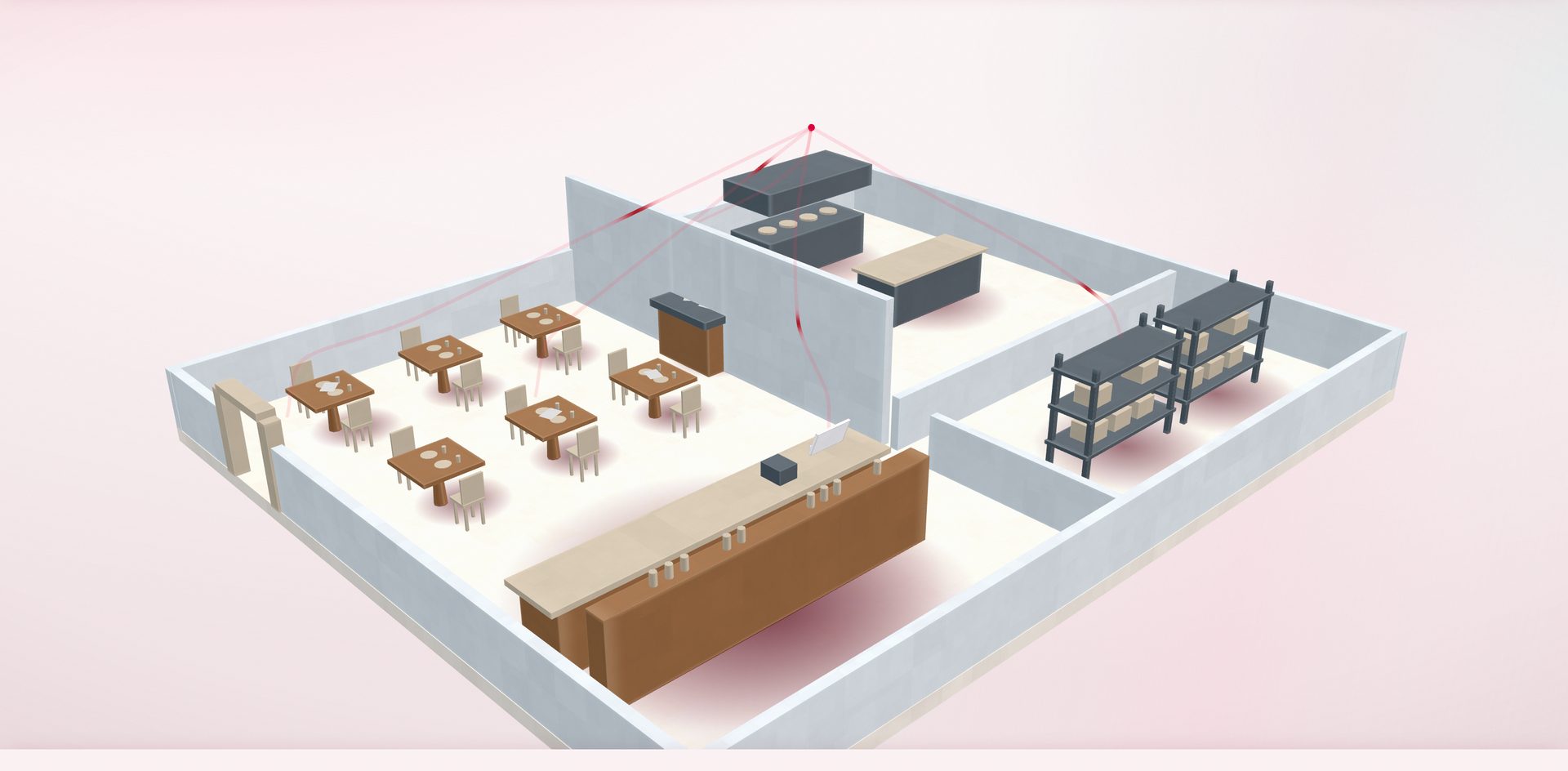
The venue, today
Eighty covers, two services. Everything holding the evening together lives in someone’s head.
The dashboard · the numbers arrive too late
One evening, from your side
All six services on one screen. It runs by itself — and three panels answer if you touch them.
Who answerstouch it
- Write the way a customer would: hours, allergies, a table.
- —
Diarytouch it
Thursday · 11 tables · 34 covers
- —
Messagestouch it
3 channels · 6 s average reply
- —
Presencetouch it
today
- —
Numberstouch it
- —
Flowstouch it
- Steaktable 4 · 7′
- Mushroom risottotable 9 · 4′
- Fresh pastatable 2 · 1′
- —
The figures are a typical 80-cover evening — the same ones on the till inside the tour.
The alternatives
What fixing it the usual ways costs
Market ranges, not quotes. Verifiable with three phone calls.
One more person
€26–32k
a year
employer cost of one full-time on the floor or at the desk
And the problem isn't solved, it's hired: on holiday, off sick or gone, everything goes back to how it was.
An agency on retainer
€1,200–2,500
a month, every month
monitoring and automations run from outside
And the system stays the agency's: the day you stop paying it isn't yours, it switches off. The retainer isn't the problem — whose it is, is. It's in the contract: read it.
Licensed software
€40–80
per seat, per month
with 5–6 seats: €3–6k a year, forever
And the venue adapts to the software, not the other way round: the flows are the vendor's, the same for everyone.
And this project?
- 01The build, oncePaid up front and yours to keep: code, flows and data on accounts in your name. It isn't an inflated entry fee — it's kept deliberately low, because the value shows up later, not at signing.
- 02The retainer, monthlyMonitoring, fixes and improvements. It's always there, and it isn't an add-on: it's the part that keeps the system alive while the venue changes. If one day you stop, the system stays yours and working — there simply isn't anyone looking after it any more.
- 03How the number adds upOne module at a time, on your real volumes, measured in the Check-up. Every line has its own price and reads on its own: take a line out and watch the total drop by exactly that line.
No lump sums, no «miscellaneous». The quote reads line by line and every line says what you're paying for and why — it's the only way the final number surprises nobody.
Indicative ranges of current price lists. Your case may sit outside them.
How you get in · quotes get inflated
What it takes, what it doesn't, in what order
The long list is where quotes get inflated. And nothing is ever switched on all at once.
You need
- A network that holds — it's the foundation: if the internal network drops, everything stops. Not the line to save money on.
- Phones for the floor — the ones you already have are fine: no dedicated handhelds to buy.
- One screen in the kitchen — any monitor on a bracket: that's where orders appear, in order.
- The till you already have — it's the only thing that stays on site: receipts and obligations compliant. Not re-bought, not replaced.
You don't need
- Replacing a management system that works
- Dedicated handhelds for waiters
- Order printers in every station
- Training courses: two watches and you've got it
We watch
A week measuring how you actually work: missed calls, kitchen times, what gets written twice. Nothing gets touched.
One piece first
The one where the pain is highest and the risk lowest. It goes into real service and gets measured against the week before.
We add
One module at a time, never two together. Each piece goes in only once the previous one has stopped being talked about.
Dress rehearsal
A full service on the new system before switching the old one off, and the fallback plan written down. Go-live is never a leap.
Questions
The ones everyone asks
Does the staff have to learn a new program?
No, and that's a design constraint, not a promise. The screens are cut around how people already work: a waiter takes their first order after watching two. If it needs a training course, the system was designed badly.
What if the internet drops during service?
The screens hold without a line: orders stay on the phones and on the kitchen display, and the till keeps issuing receipts because it's on site. When the line returns, everything re-syncs by itself. There's no new device to buy for this.
Do we have to throw away the system we have?
Almost never. The certified part (till, receipts) is a layer of its own that stays compliant; the tailored layer sits on top. If you change till supplier one day, the work done above isn't thrown away.
How long before we see something?
The first piece goes into real service in about two weeks from signing. That's not the whole system: it's the part that solves the biggest pain, in production and measured.
What about our guests' data?
It stays yours, on your accounts, with an NDA and a data processing agreement signed before we start. No guest data is used to train models.
Does it work for a hotel or a bar too?
Yes: the centre doesn't change — who answers, where requests end up, who sees the numbers. The modules around it do. That's why the second venue costs far less than the first.
Want to see what it looks like in your venue?
It starts with the Check-up: I look at how you work today and tell you where the time actually goes, with the numbers next to it. Free, in 48 hours.
The same base carries hotels, bars, B&Bs and campsites. Your sector.